 ORC System
 Gas Expander
 Heat Pump to Steam
 Heat Pump to Hot Water
 Compressor Technologies
 Next-Generation Geothermal
 Conventional Geothermal
 Waste Heat to Power
 Biomass
 Waste to Energy
 Industry
 District Heating
 CCUS
 English
 Italiano



Part of Mitsubishi Heavy Industries (MHI) Group
Since 2013 Turboden is part of Mitsubishi Heavy Industries Group
The strength of being part of Mitsubishi Heavy Industries Group, together with the vast technical expertise in the carbon mitigation, the capability to be flexible throughout the project lifecycle, make Turboden a dependable partner for optimised solutions to decarbonize processes.
Mitsubishi Heavy Industries Group is one of the world’s leading industrial groups, spanning energy, smart infrastructure, industrial machinery, aerospace, and defense. MHI Group combines cutting-edge technology with deep experience to deliver innovative, integrated solutions that help to realize a carbon neutral world, improve the quality of life and ensure a safer world.

HISTORY
The origin of MHI can be traced all the way back to 1884
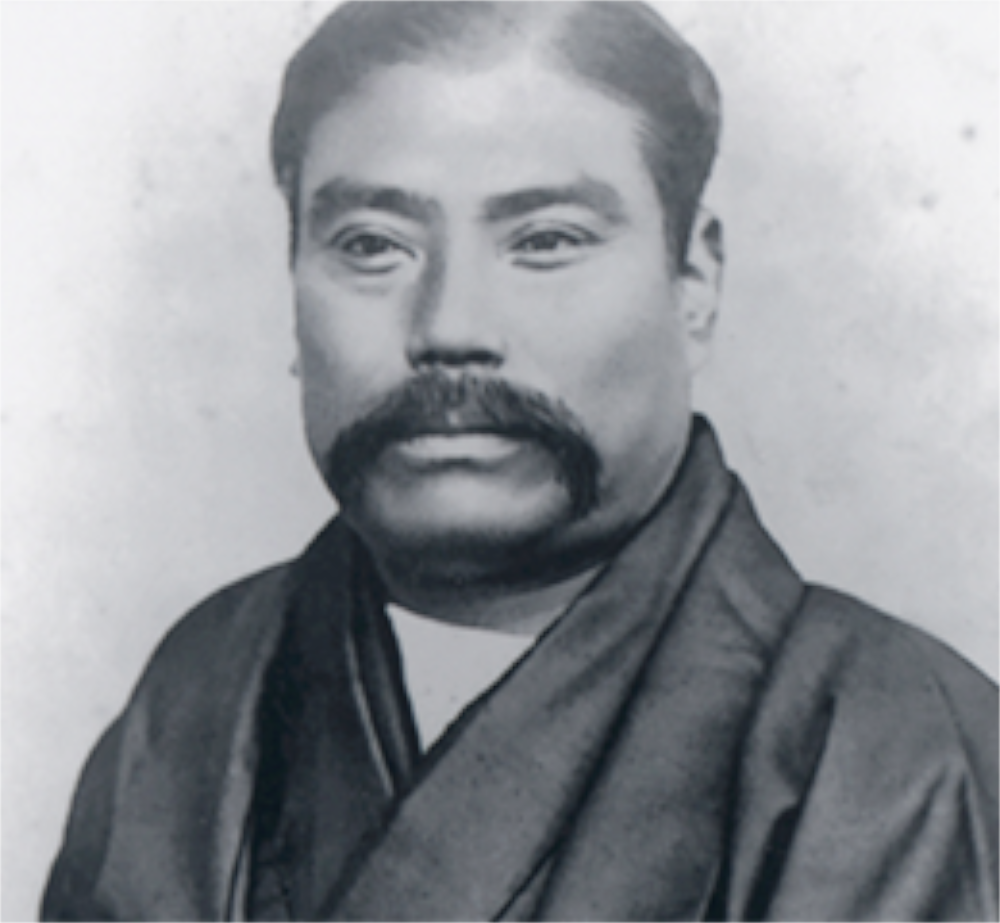
In that year, Yataro Iwasaki – the founder of Mitsubishi, took a lease out on government-owned Nagasaki Shipyard. He named it Nagasaki Shipyard & Machinery Works, and started the shipbuilding business on a full scale.
This shipbuilding business was later turned into Mitsubishi Shipbuilding Co., Ltd., and then launched as Mitsubishi Heavy-Industries, Ltd. in 1934, manufacturing ships, heavy machinery, airplanes, and railroad cars.
Following the end of World War II, a law aimed at dissolving "zaibatsu" or Nagasaki Shipyard & Machinery Works dismantling the over concentration of economic power was in effect. Thus, in 1950, MHI was divided into three entities: West Japan Heavy-Industries, Ltd., Central Japan Heavy-Industries, Ltd. and East Japan Heavy-Industries, Ltd. It was later consolidated in 1964 and reborn as Mitsubishi Heavy Industries, Ltd.
In 1970, MHI's automobile department became independent and Mitsubishi Motors Corporation began manufacturing and marketing automobiles.
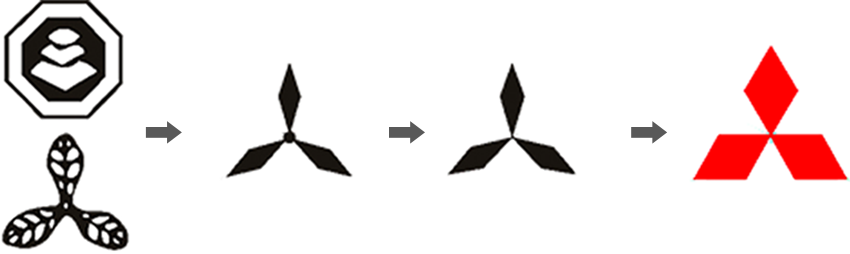
The "Three Diamonds", company symbol of Mitsubishi Heavy Industries, Ltd.
The "Three Diamonds", company symbol of Mitsubishi Heavy Industries, Ltd., originated with the symbol of the ship's flag which the company's forefather, Tsukumo Shokai, adopted when it started the shipping business. This symbol is a transformed version of the family emblem of Yataro Iwasaki, the founder of Mitsubishi.
Building a Transportation Infrastructure from Roots in Shipbuilding
1880 – 1945
MHI’s monozukuri began with the lease of Nagasaki Shipyard from the Ministry of Industry. Even as the company built Japan’s first steel steamship and battleships, it applied the technologies and knowledge cultivated in those endeavors to begin production of automobiles and aircraft, thereby expanding its range of business as a comprehensive manufacturer of transportation equipment. As global tensions rose, the company entered into an age in which its technologies—more advanced than those of most countries at that time—would be diverted to military use.
Supporting Post-war Recovery with Consumer Products
1946 – 1963
After the war, in accordance with national policy, MHI shifted its emphasis from military hardware to the development and manufacture of scooters, air conditioners, and many other types of consumer products. In 1950, in line with the GHQ’s policy of dissolving large industrial groups (zaibatsu), MHI was divided into three independent companies. As a result, the scale of products grew more diverse, and the three companies fell into competition. However, this technology race would provide the foundation for the leading company in heavy industry.
Merging of Three Heavy Industry Companies Leads to Large-scale Development
1964 – 1990
In 1964, the same year Tokyo hosted the Summer Olympics, the three principal heavy industry companies reunited, creating today’s form of MHI Group. Its products expanded to encompass the fields of land, sea and air, and included oildrilling rigs, power plants, tankers and bridges. In addition, the successful lift-off of the H-I launch vehicle occurred during this period, and the Group’s participation in full-fledged space development began.
Supporting a Sustainable Society as a Comprehensive Infrastructure Company
1991 – today
MHI Group has always sought high efficiency, and as the trend toward global environmental conservation gains momentum and the concept of ecology becomes commonplace, the company’s gas turbine, eco-ship and other technologies and product fields are expanding on a global scale. The Group is working to develop technologies and products that help make societies more sustainable while raising its profile worldwide as a comprehensive infrastructure company.