
How to valorize waste heat: innovative technologies and approaches
Solutions for transforming energy waste into a valuable resource to improve industrial efficiency and contribute to decarbonization
12 December 2025
In industry, a significant proportion of the energy consumed is lost in the form of waste heat, representing both an energy waste and an opportunity to improve efficiency and reduce operating costs. According to the US Department of Energy, it is estimated that between 20% and 50% of the energy used in industrial processes ends up as unused heat, released into the atmosphere without being recovered or, worse still, treated by consuming additional energy and resources. Globally, this amounts to thousands of TWh of thermal energy per year that could be usefully reused.
In this article, we at Turboden want to explore the topic of waste heat and analyze the most effective solution for transforming it into useful energy.
What is waste heat and how is it generated?
Waste heat refers to thermal energy generated by an industrial or chemical process that is not used to produce useful work or contribute to other productive purposes. In practice, it is heat that is dissipated into the environment through fumes, exhausts, hot surfaces, or other means, representing an energy loss. Some clear examples are:
- Hot fumes from energy-intensive industries (e.g., steel mills, cement plants, glassworks, etc.);
- Hot water discharged from cooling processes;
- Exhaust steam from dryers, evaporators, or industrial turbines;
- Residual heat generated by chemical reactions or engines in industrial operations.
Traditionally, much of the waste heat was dispersed for technical or economic reasons, or due to a lack of awareness. Today, with the challenges of sustainability and rising energy costs, recovering waste heat has become a strategic approach for industries and utilities, capable of improving overall efficiency and reducing both operating costs and emissions.
Advantages of recovering waste heat
Waste heat recovery offers a number of strategic benefits. The first benefit is increased overall energy efficiency: by recovering thermal energy that would otherwise be lost, a plant can produce additional electricity or useful heat without increasing primary energy consumption. This leads to a reduction in operating costs and, indirectly, in fuel consumption, while at the same time allowing the self-production of a portion of electricity that would otherwise have to be purchased and/or generated less efficiently, and a reduction in CO₂ emissions.
Waste heat recovery makes companies more competitive, particularly energy-intensive businesses, by reducing vulnerability to energy price fluctuations and improving operational resilience.
Finally, this practice fits perfectly within the circular economy, making use of thermal resources that would otherwise be wasted and promoting more sustainable production.
It is therefore clear that the advantages of waste heat recovery are numerous and significant: a concrete opportunity that companies cannot afford to overlook.
The most effective solution for utilizing waste heat: ORC (Organic Rankine Cycle)
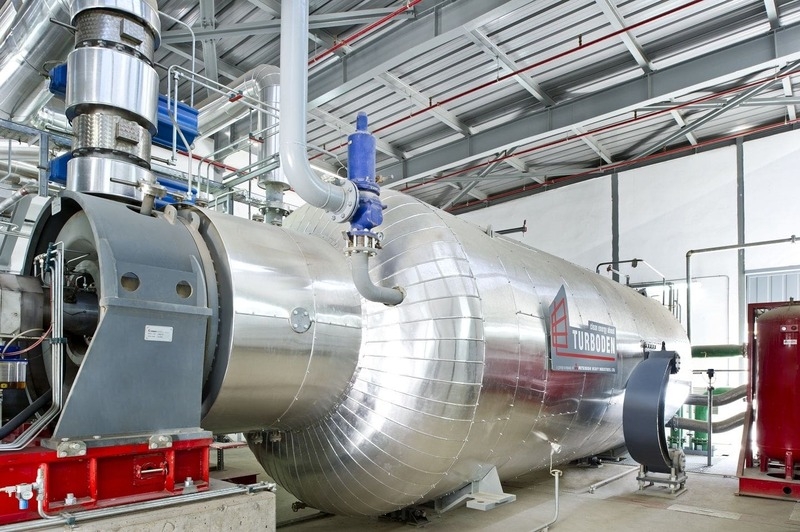
Among the technologies available for waste heat recovery, an increasingly effective and well-established solution is the Organic Rankine Cycle (ORC). This system allows unused heat, even at low and medium temperatures, to be converted into renewable electricity in an efficient and sustainable way, both in dissipative and cogenerative configurations. The ORC works on a principle similar to that of the classic steam cycle, but uses organic fluids (instead of water) with lower boiling points.
The main advantages of ORC
ORC offers numerous advantages that make it the ideal choice for waste heat recovery:
- High conversion efficiency, even in the presence of low and medium temperature heat sources.
- Low operating and maintenance costs, thanks to the simplicity of the cycle and the characteristics of the system.
- Automatic and flexible operation, without the need for continuous supervision during operation.
- No water consumption, which is particularly advantageous for systems located in arid areas or areas with limited water resources.
- Consolidated Turboden technology, with over 45 years of experience and numerous plants installed worldwide.
In this context, we at Turboden are leaders in the ORC sector and in the use of this technology for the efficient recovery of waste heat, offering tailor-made solutions for every industrial need.
Our experience in waste heat recovery, proven in the field
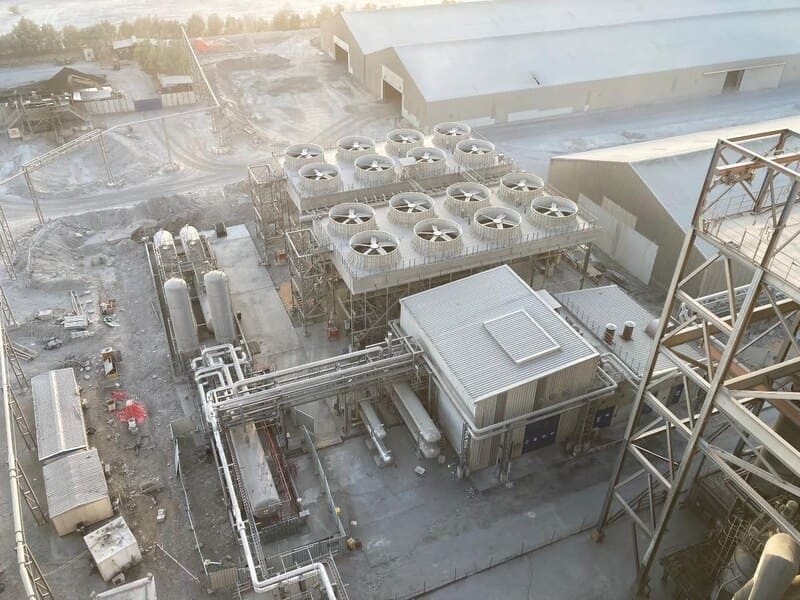
Over the years, we have deployed our ORC technology in numerous international projects, making a concrete contribution to the transition towards a more efficient and sustainable industry. One of the most significant examples is our plant built for Riyadh Cement.
The system, currently undergoing commissioning, will have a capacity of 13 MW and will be the largest ORC plant ever installed in the world for heat recovery from the cement production cycle to date. Energy will be generated by recovering the heat dispersed from the exhaust gases of the cement production process, transforming it into renewable electricity produced directly on site.
Thanks to this solution, Riyadh Cement will be able to reduce its energy requirements, cut operating costs, and make a significant contribution to the decarbonization of the cement industry.
This project demonstrates the effectiveness and scalability of our technology, confirming Turboden as a benchmark in waste heat recovery through reliable, efficient ORC systems tailored to each industrial context.
Conclusions
In conclusion, waste heat recovery is now one of the most concrete and readily available opportunities for improving energy efficiency in industry, reducing costs and emissions, and promoting an increasingly circular economy.
Contact us to find out how we can support your company on its path to efficiency and decarbonization!
