
The role of ORC (Organic Rankine Cycle) plants in the woodworking industry
An in-depth look at this technology, which is so important for improving energy efficiency, decarbonization, and reducing production waste
08 April 2026
The woodworking sector plays a strategic role in modern manufacturing. In particular, the production of wood-based panels (such as chipboard, OSB, and MDF) requires significant amounts of both electrical and thermal energy. The pressure to improve energy efficiency and reduce CO₂ emissions has grown considerably in recent years, prompting companies to seek more sustainable and intelligent solutions. In this context, ORC (Organic Rankine Cycle) plants are establishing themselves as a key technology for the energy transition in the wood sector.
In this article, we at Turboden will analyze the main challenges facing the woodworking industry and show how our ORC solutions make a concrete contribution to energy efficiency, decarbonization, and economic competitiveness in this sector.
Challenges in the woodworking industry
Wood processing is an energy-intensive process, characterized by complex stages such as particle or fiber drying, thermal pressing, and refining. In particular, panel production requires heat at varying temperatures and a continuous supply of electricity to operate machinery, plants, and auxiliary systems. The growing instability of energy markets and the need to reduce dependence on fossil fuels make energy management a strategic priority for manufacturers.
Another critical factor is regulatory and social pressure to reduce environmental impact. Companies in the sector face challenges related to decarbonization, reducing operating costs, and valorizing production waste, which is often abundant and complex to manage. If properly treated, this waste can be transformed into a valuable energy resource. All this requires integrated and flexible solutions that not only allow companies to self-produce energy from renewable sources, but also to do so efficiently, reliably, and with minimal environmental impact.
Why ORC is the ideal technology for energy efficiency and decarbonization in the wood industry
In the woodworking sector, ORC technology integrates naturally and strategically, thanks to its ability to utilize both virgin and residual biomass and generate renewable energy in both electrical and thermal form. Turboden's ORC plants use organic fluids that allow them to operate with high efficiency even at medium-low temperatures, characteristics that make them ideal for industrial applications with diverse thermal requirements, such as those typical of the wood supply chain. This flexibility allows for easy integration into existing production processes, maximizing energy self-consumption and reducing dependence on fossil fuels.
Furthermore, the possibility of adapting the system to the specific needs of each plant allows players in the wood supply chain - such as manufacturers of panels, plywood, or other derivatives - to achieve important objectives in terms of sustainability, emission reduction, and long-term energy cost control.
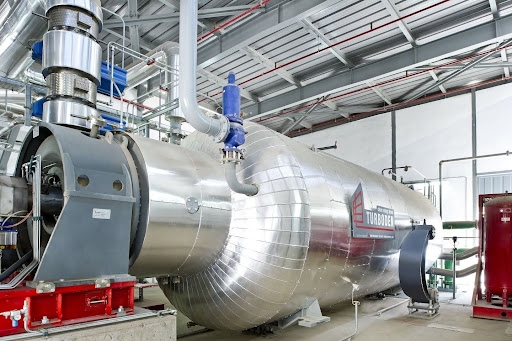
The advantages of ORC for companies in the timber industry
Let's now analyze all the advantages for companies in the woodworking sector:
- Valorization of processing waste: ORC plants allow lignocellulosic residues from the production process - such as wood chips, sawdust, dust, and bark - to be transformed into useful energy, reducing disposal costs and exploiting a local renewable source.
- High-efficiency cogeneration: a single plant can simultaneously produce electricity and heat, improving the overall efficiency of the system and optimizing energy consumption at the production site.
- Low environmental impact technology: these systems use organic fluids instead of water, allowing efficient operation at moderate temperatures and reducing water consumption. Air-cooled models (ACC) completely eliminate the use of water in the condensation process.
- Flexibility and modularity: the range of available power outputs, up to 20 MWe electrical and 80 MW thermal, allows adaptation to various production scales and types of energy requirements, with the possibility of integration in both new plants and retrofits.
- Emissions reduction: the use of biomass as a primary source allows for a drastic reduction in CO₂ emissions, actively contributing to the company's decarbonization and environmental sustainability goals.
- Simplified management: thanks to their high degree of automation, ORC plants can be managed with low maintenance and without the need for specialized personnel, reducing operating costs and increasing reliability.
Turboden's long experience in the sector
Over the years, Turboden has built numerous ORC plants dedicated to wood processing and the biomass sector, actively contributing to the energy transition of many industrial companies in Europe and around the world. A concrete example of the value of our solutions is our collaboration with Kastamonu Entegre, one of the leading manufacturers of wood-based panels in Turkey. Since 2010, we have supplied Kastamonu with five ORC plants, distributed among the Gebze, Balikesir, and Kastamonu sites, for a total installed capacity of over 57 MWe.
In 2022, we installed two new plants, each with a capacity of 13.6 MWe. The first, an air-cooled (ACC) system located in Balikesir, produces electricity without using water, saving around 30,000 tons of CO₂ per year. The second plant, in the province of Kastamonu, is a cogeneration system that generates both electricity and hot water, ensuring a combined reduction in emissions of approximately 92,000 tons of CO₂ per year.
Both plants supply energy to the national grid under the YEKDEM tariff regime, and many components - including the ACC capacitor - were manufactured locally at our Izmir Aliaga plant, thereby strengthening the added value of the supply chain.
Conclusion
In conclusion, the integration of ORC technology in the woodworking sector is now a strategic lever for addressing the challenges of energy efficiency, environmental sustainability, and industrial competitiveness.
At Turboden, we offer consolidated experience, cutting-edge technologies, and an innovation-oriented vision, with the aim of supporting players in the wood industry on a virtuous path towards a more sustainable future. Contact us now to design a tailor-made energy solution!
