
Conventional Geothermal
Conventional geothermal energy is a renewable and reliable source that uses the Earth's internal heat to generate electricity and thermal energy. It is most accessible in regions near tectonic plate boundaries or where the Earth's crust is thin. The typical method involves tapping into natural hydrothermal systems, where water seeps into the crust, gets heated by surrounding rocks, and collects in underground reservoirs. This hot water and steam are then extracted through wells and converted into usable energy.
For medium-to-low temperature geothermal fields, Organic Rankine Cycle (ORC) technology offers an efficient and cost-effective solution for power generation with power outputs reaching up to 40 MWe per single shaft for sources with water temperature from 100°C to 300+°C.
-
TURBODEN GEOTHERMAL APPLICATION
-
VELIKA CIGLENA - 17.5 ME GEOTHERMAL POWER PLANT
-
LIGHTING DOCK - 14 MW GEOTHERMAL PLANT
TURBODEN ORC SOLUTION FOR GEOTHERMAL POWER PLANTS
- +45 years of experience in designing ORC systems
- Axial multi stage turbine, proprietary Turboden design
- Thermodynamic process and controls developed by Turboden
- In-house equipment (Air Cooled Condenser, Heat Exchangers)
- Remote operation: off grid mode and grid balancing
- Optimized plant footprint tailored to client needs
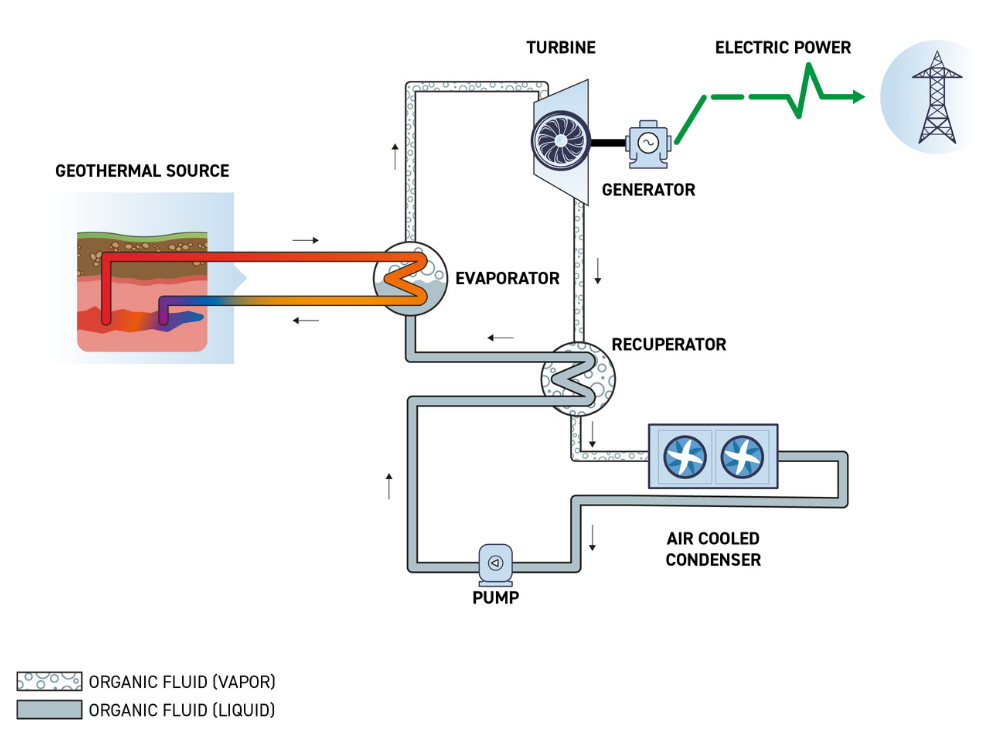
Example of a simplified Turboden technological solution integrated into a customer's plant
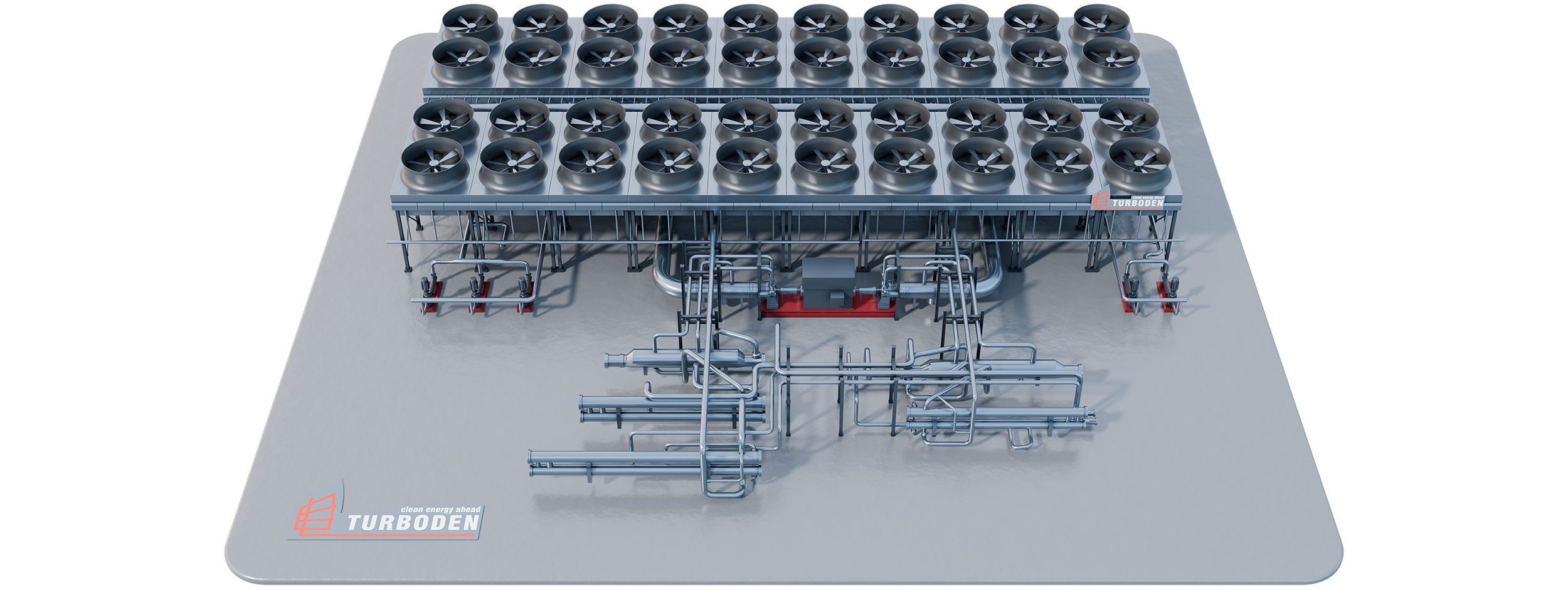
MAXIMIZING GEOTHERMAL POTENTIAL WITH TURBODEN BINARY ORC TECHNOLOGY
Turboden Binary Organic Rankine Cycle (ORC) plants offer a clean and efficient solution for geothermal power generation. These systems use heat exchangers to transfer thermal energy from geothermal fluid to a secondary organic working fluid, which vaporizes and drives a turbine to produce electricity. The geothermal fluid remains in a closed-loop circuit—from extraction to reinjection—ensuring zero atmospheric emissions.
Residual heat not converted into electricity can be supplied to thermal users or dissipated through appropriate cooling systems, enhancing overall energy utilization. ORC technology is particularly effective for high-steam-fraction geothermal resources in areas where centralized fluid collection is impractical, making modular wellhead units the preferred solution.
Existing single-flash geothermal plants can also be upgraded by integrating an ORC system on the separated brine stream prior to reinjection. This allows additional power generation from the same resource, improving plant efficiency and return on investment.
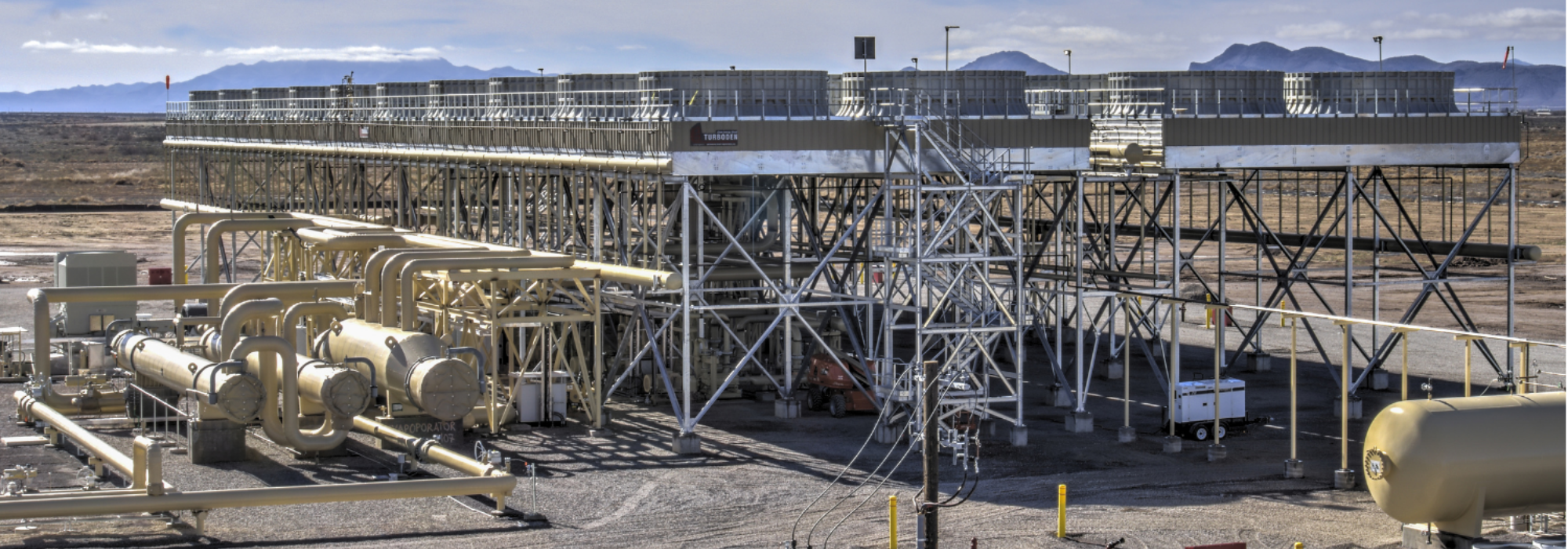
MAJOR APPLICATIONS FOR ORC TECHNOLOGY
- Low-to-medium enthalpy applications: a flexible and versatile solution capable of generating power from different sources (brine or steam+brine), with a proven track record in Germany, US, and other countries.
- Bottoming solutions: an ideal option to enhance overall geothermal plant output by utilizing outlet streams from existing flash power plants, successfully implemented in the Palayan and LaGeo projects.
- Power generation with lithium extraction: ORC technology can be seamlessly integrated into this process, ensuring higher efficiency and improved control. An example of this type of application is the Lionheart Project from Vulcan Energy Resources, based in the German Upper Rhine Valley.
ADVANTAGES
- Large scale ORC
- Combined heat and power solutions
- Plant availability up to 99%
- No corrosion and no scaling in the turbine: geothermal fluid remains outside the binary loop
- Stable efficiency across various conditions
- Binary cycle efficiency up to 25%
- Maximum size 40 MW per single shaft
- Zero emissions and full reinjection achievable
- Robust design, low vibration, and strict quality tests in collaboration with the Mitsubishi team
- Complete in-house design (above ground process and technology)
PALAYAN PROJECT: BOTTOMING APPLICATION
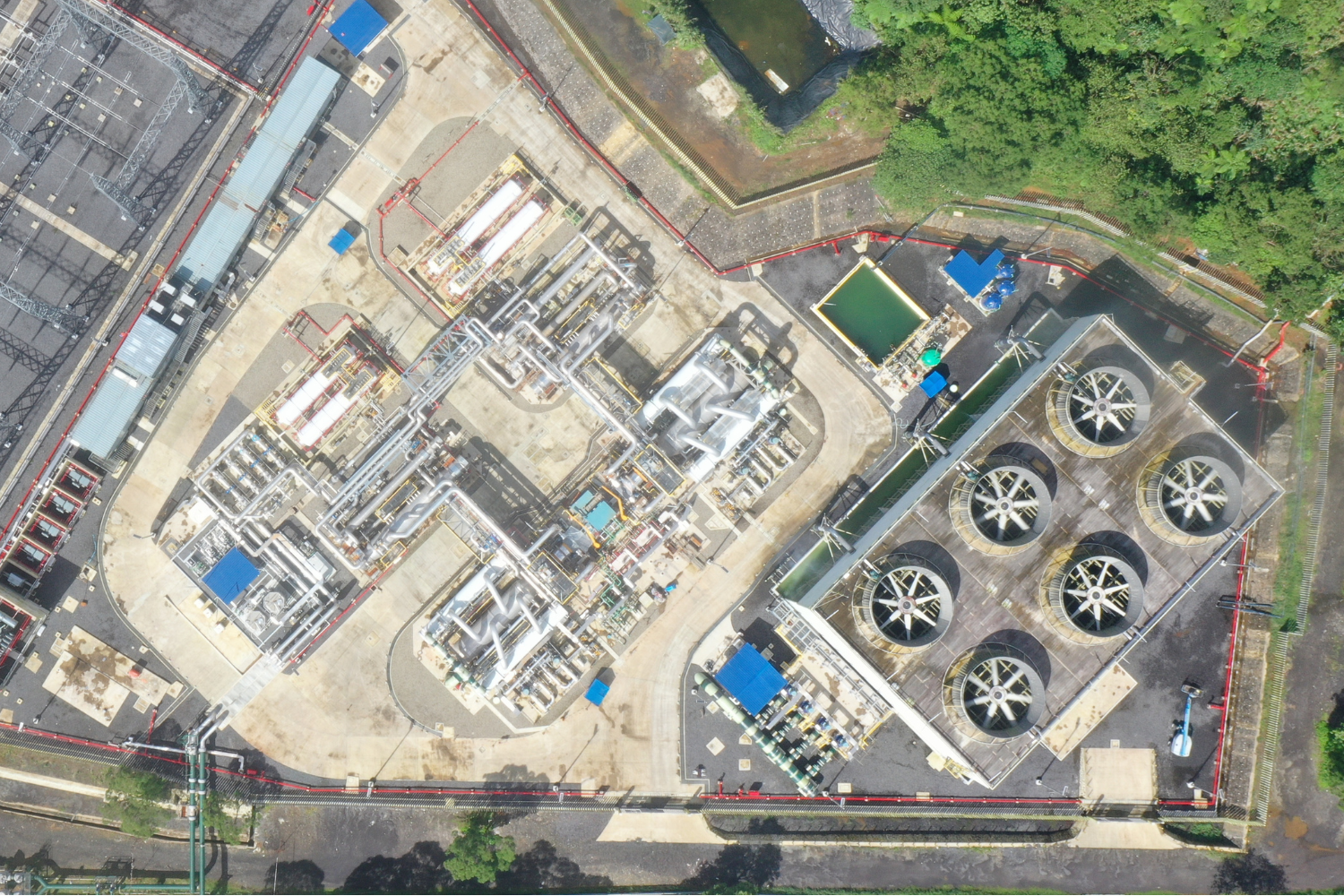
- Heat dissipation system: Water cooling tower
- PP owner / operator: Energy Development Corporation
- Gross power output (MW): 29 MW
- Net power output (MW): 25 MW
- Geothermal water inlet temperature: 171 °C
- Start up: Q1 2024

Other Solutions
POWER GENERATION


HEAT ELECTRIFICATION


